Building New in South Gulf Cove: A Lot-to-Launch Guide
April 23, 2026
April 23, 2026
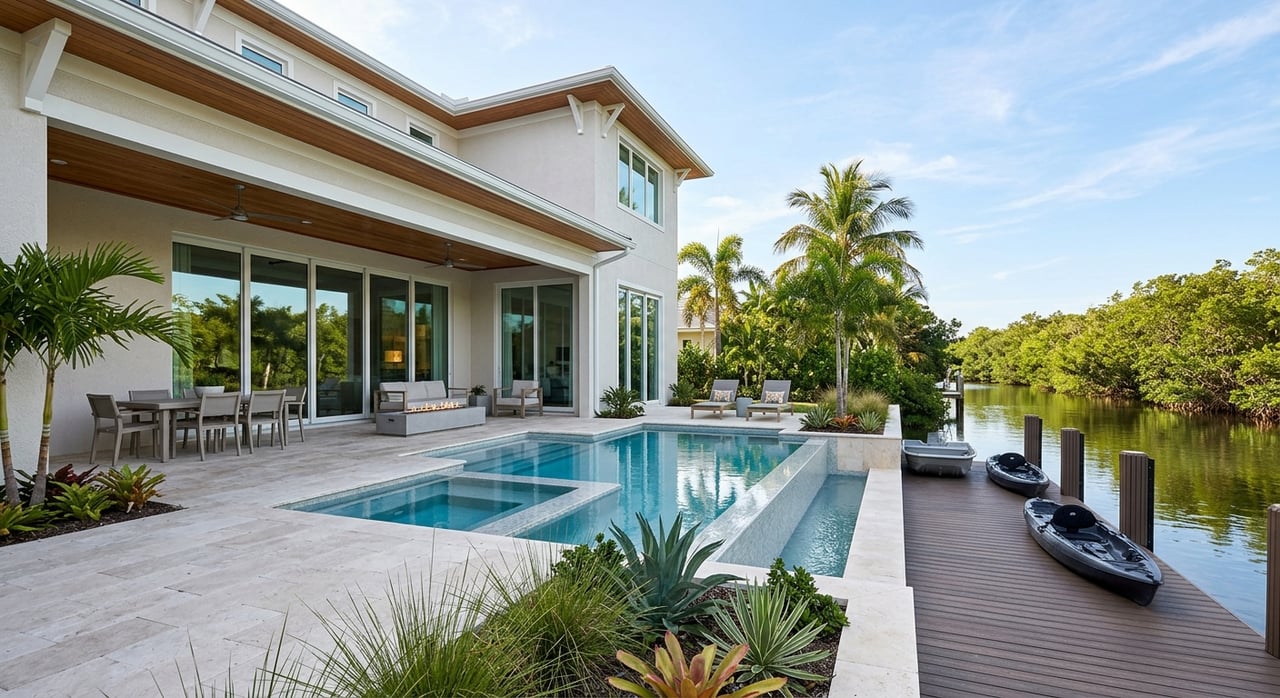
Thinking about building new in South Gulf Cove? The exciting part is easy to picture: your floor plan, your dock, your pool, and your boat out back. The tricky part is that in South Gulf Cove, the lot itself shapes almost everything that comes next. If you want a smoother path from purchase to move-in, it helps to understand how canals, utilities, flood requirements, deed restrictions, and permits all work together. Let’s dive in.
South Gulf Cove is a boating-first new-build market, not a typical subdivision where the house plan comes first. According to Charlotte County planning materials, the community is essentially an island connected by four bridges, with the Interceptor Lagoon and lock system providing access to the Myakka River, Charlotte Harbor, and the Gulf of Mexico.
That water access is a major part of the appeal, but it also means your lot decision is about more than location and price. It is also about how your property connects to the waterway system, what your future dock setup may look like, and how infrastructure timing may affect your build.
Charlotte County also notes that South Gulf Cove is served with county water and sewer. At the same time, all vehicle access comes from the east through four boulevards, which adds another layer of practical planning when you are building from scratch in this area.
In South Gulf Cove, the lot is not just where you place the house. It is the starting point for your build strategy.
Before you write an offer, you will want to confirm the lot orientation, canal position, and how the parcel may support the home and boating setup you have in mind. That includes reviewing whether the lot can realistically accommodate your preferred dock layout, outdoor living design, and drainage plan.
If boating is a priority, navigation conditions matter early. Charlotte County’s South Gulf Cove maintenance dredge information states that the exterior access channel is being maintained at a typical 60-foot width and a depth of -6.2 feet NAVD88, or -5.0 feet MLW. In simple terms, your boat’s draft and intended use should be part of lot selection, not something you figure out after closing.
Two lots may both be waterfront, but they may not function the same way for your goals. Canal location, orientation, access conditions, and easements can all affect what you can build and how you use the property.
This is one reason South Gulf Cove buyers benefit from treating the purchase as a land-and-water decision. You are not just choosing where to build a house. You are also choosing a waterway position that may shape your dock design, lift placement, and long-term boating use.
A lot can look attractive online and still need deeper review before you move forward. Charlotte County’s single-family permit requirements make clear that surveys, site plans, setbacks, utility documentation, and flood compliance are all part of the official process.
That means one of the smartest early questions is simple: Is this lot truly buildable for what you want to create? If the answer is unclear, that is your signal to slow down and verify the details before committing.
South Gulf Cove is deed-restricted, and that can affect design choices from day one. The South Gulf Cove HOA governing documents state that new homes must comply with the community’s deed restrictions and architectural design requirements, and that those deed restrictions override county zoning when the two differ.
That point catches many buyers off guard. Even though the HOA is voluntary, the deed restrictions still apply to property owners throughout the community. In addition, lots in section 094 fall under the separate Waterview Property Owners Association.
The HOA states that new homes, garages, improvements, fences, and exterior paint generally require ARC preapproval. It also states that no construction can begin before ARC review and board approval, though in-ground pools, docks, seawalls, and roof replacement do not require ARC review.
You can review those architectural requirements and forms on the South Gulf Cove ARC information page. The practical takeaway is that county approvals and HOA approvals do different jobs, and you need to account for both.
This is where many new-build plans either gain momentum or hit delays. South Gulf Cove buyers should verify survey, flood, and utility details before finalizing design decisions.
Charlotte County’s single-family permit package requires an up-to-date signed and sealed survey, plus a drainage or site plan showing setbacks to property lines, the seawall or mean-high-water line, and any easements. The county also requires utility documentation showing Charlotte County Utilities service, a septic permit, or a utility letter.
If your lot is in a Special Flood Hazard Area, Charlotte County requires under-construction and final elevation certificates. The county also notes that permit completion depends on an elevation certificate showing compliance, and that the current FEMA maps became effective on Dec. 15, 2022, with design professionals using NAVD88.
For you as a buyer, that means flood planning is not a side issue. It is part of how the home is designed, permitted, and completed.
Charlotte County advises owners to request utility availability by lot, with the street address and short legal description matching. The county also notes that if sewer is considered available under county code, connection fees are mandatory.
Timing matters too. The same county sewer information says that a new sewer connection adjacent to an existing line may take two to three months to install. If you are targeting a specific construction start or move-in window, this is an important detail to factor in early.
A custom home usually goes more smoothly when the design team starts with the permit path, not just the floor plan. Charlotte County’s new single-family permit checklist includes signed and sealed plans, energy calculations, product specifications, a notice of commencement, and other property-specific items.
County review can also include building code compliance, wind loads, flood loads, natural resources, right-of-way impacts, tree removal, zoning, and utility connections. In other words, the best South Gulf Cove homes are usually designed as coordinated projects from the beginning.
In this market, the site plan often matters as much as the floor plan. Your home, pool, screen cage, drainage, grading, and dock should work together on the lot.
Charlotte County’s pool and spa permit page notes that pool projects can require tree permits, accessory-structure affidavits, and licensed pool contractors. That is one reason buyers often benefit from thinking about the entire property as one integrated plan instead of a series of separate upgrades.
Some buyers consider acting as an owner-builder, but that choice comes with limits. Charlotte County states on its permit pages that an owner-builder cannot rent or sell the property for one year after completion.
For many buyers, investors, and second-home owners, that makes working with a licensed general or residential contractor the more practical route.
In South Gulf Cove, the dock is not an afterthought. It is often one of the central design decisions on the property.
Charlotte County’s dock permit page requires sealed plans, a site plan, and external approvals from the Florida Department of Environmental Protection and or the U.S. Army Corps of Engineers. The county also reviews dock work for wind loads, flood loads, protected species, sea-turtle lighting, zoning, and right-of-way impacts.
If a dock, seawall, or access structure touches county easements, Charlotte County may require an occupation-of-easement agreement. That review can involve county departments, utility companies, and recorded documentation.
The key takeaway is simple: confirm easements before finalizing the dock layout or lift position you want. It is much easier to solve those questions before design expectations are locked in.
From the HOA side, docks and seawalls do not require ARC review, but the house and many visible exterior changes do. That means the county generally handles the engineering and permitting side of the water improvements, while the HOA focuses on covenant compliance and architectural review for the home and lot appearance.
Understanding that split can help you avoid confusion and better sequence the project.
The biggest mistake buyers make in South Gulf Cove is treating the build like a standard new-construction purchase. In reality, this is a coordinated waterfront project where the lot, the boat, the dock, the flood zone, the utility path, and the association rules all connect.
When you approach it that way, better decisions tend to follow. You can evaluate lots more carefully, ask stronger due-diligence questions, and build a team around the full picture instead of reacting to surprises later.
If you are considering a lot purchase or custom build in South Gulf Cove, working with local guidance can make the process clearer from the start. When you are ready to talk through land selection, waterfront considerations, and the build path, connect with Olivia Jones for a private consultation.
Stay up to date on the latest real estate trends.
October 8, 2026
October 1, 2026
September 24, 2026
September 17, 2026
September 10, 2026
September 3, 2026
August 27, 2026
August 20, 2026
August 13, 2026
Whether you are looking for luxury Boca Grande homes for sale or want to list your South Florida estate, I always provide exceptional service and diligent attention to detail. If you are looking to partner with a local real estate agent who will always put your needs first, let's see how we can work together!